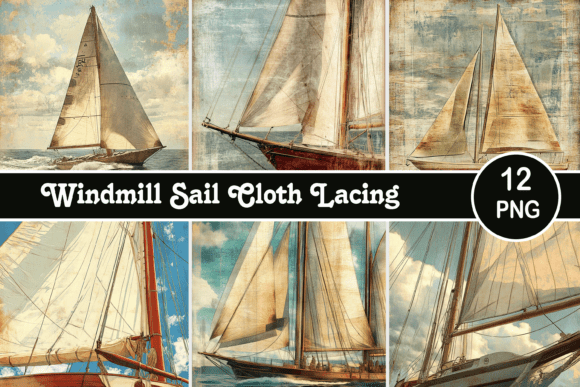
Windmill Sail Cloth Lacing: A Designer's Guide
You know the feeling. You're scrolling through a sea of clean, geometric sans serifs and elegant, flowing scripts, and then something stops you. It’s a typeface with character, one that feels less like a computer-generated font and more like a piece of history. That’s the immediate impression of Windmill Sail Cloth Lacing. It’s not just a set of letters; it’s a texture, a story, a tangible piece of craft. For designers and creators looking to inject authenticity and a sense of rugged charm into their work, this font offers a unique starting point.
Understanding the Aesthetic and Personality
At its core, Windmill Sail Cloth Lacing is a display font with a distinct handcrafted, almost utilitarian personality. Imagine the thick, sturdy canvas of a windmill sail, the kind that has weathered seasons. Now, picture the intricate, functional lacing that holds it to the wooden frame—those repetitive, textured lines and knots. This typeface captures that essence. Its characters often feature a slightly uneven baseline, subtle ink traps that mimic the absorption of dye into thick fabric, and a weight that feels substantial and grounded. It’s a premium font that leans into its heritage, offering a visual language of durability, tradition, and honest craftsmanship.
The overall appeal lies in its ability to communicate authenticity without saying a word. It’s a creative font that bridges the gap between a bold serif font and a textured script font, creating a niche that feels both historical and surprisingly versatile. It doesn’t shout; it speaks with a confident, weathered voice.
Where This Typeface Truly Shines
Knowing where to deploy a font like Windmill Sail Cloth Lacing is key to leveraging its strengths. Its personality is too strong for body text, but it excels as a headline or accent typeface in projects that aim for a specific mood.
- Branding & Logo Design: This is a natural fit. It’s perfect for brands in the artisanal food space (think craft breweries, bakeries, or coffee roasters), outdoor apparel companies, or any business wanting to emphasize heritage, durability, and a handcrafted product. A logo set in this font immediately tells a story of quality and tradition.
- Packaging Design: The textured, tactile feel of the font translates beautifully to physical products. Use it on labels for small-batch goods, on the packaging for rugged tools, or on the cover of a specialty notebook. It adds instant shelf appeal and communicates a premium, thoughtful quality.
- Editorial & Publishing: For magazine spreads about travel, history, or adventure, or for book covers in genres like historical fiction or mystery, Windmill Sail Cloth Lacing can set a powerful tone. It works wonderfully for pull quotes, chapter titles, or section headers.
- Digital & Social Media: In a digital context, use it sparingly for maximum impact. It’s an excellent choice for the main title in a YouTube thumbnail, a bold headline on a landing page for a rustic product, or as a striking element in social media graphics for a brand with a vintage or artisanal aesthetic. Its high-resolution PNG format, as mentioned in the background bundle, ensures it looks crisp on any screen.
Making Informed Design Decisions
Integrating a distinctive font into a project requires thoughtful consideration. Here’s how to approach it practically.
Evaluating Project Fit and Font Pairings
First, ask if the font’s personality aligns with your project’s core message. If the brand is about sleek minimalism or futuristic tech, this is likely the wrong choice. If it’s about heritage, craft, or rugged individualism, you’re on the right track. For font pairing, contrast is your friend. Pair Windmill Sail Cloth Lacing with a clean, modern sans serif font for body copy. The simplicity of the sans serif will provide breathing room and ensure readability, allowing the display font’s texture to be the star without overwhelming the viewer.
Readability and Visual Hierarchy
As a textured display font, legibility at small sizes or in long paragraphs will be compromised. Its strength is in large, impactful applications. Use it to establish the top of your visual hierarchy—the first thing someone reads. Let it draw the eye, then transition to a more neutral typeface for supporting information. This creates a clear, engaging flow.
Licensing and Practical Use
Always verify the licensing for any commercial font you download. Ensure the license covers your intended use, whether it’s for a client’s logo, merchandise, or digital products. The bundle mentioned offers high-quality design assets, but understanding the terms is a non-negotiable part of professional practice. Before finalizing, test the font in context. Mock it up on a business card, a website header, or a product label to see how it interacts with colors, imagery, and other design elements.
In the end, Windmill Sail Cloth Lacing is more than just a typeface. It’s a tool for storytelling. When used with intention and skill, it can elevate a project from merely looking good to feeling genuinely authentic, helping to build a brand identity that resonates on a deeper level. It’s a testament to how the right typeface can carry the weight of a narrative all on its own.