Spring Garden Pages Junk Journal: A Creative Toolkit for Makers
There’s something about the texture of old paper, the faint impression of a pressed flower, or the faded script of a forgotten letter that sparks a particular kind of creative energy. For makers, journalers, and artists, this isn’t just nostalgia—it’s a raw material. The Spring Garden Pages Junk Journal is a digital collection designed to capture that essence, offering a set of printable pages that serve as a foundation for countless projects. It’s more than just a pretty paper pack; it’s a starting point for building tangible, textured worlds within your craft.
Anatomy of a Digital Toolkit
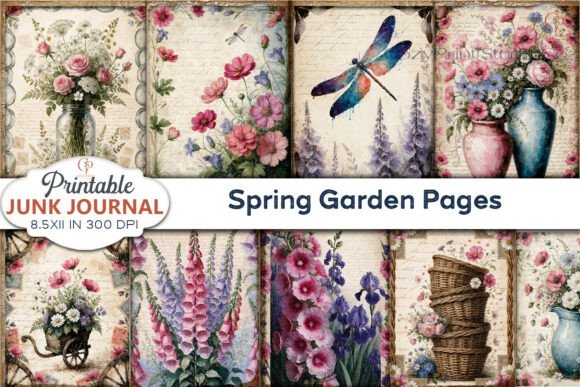
Understanding what you’re working with is the first step to unlocking its potential. This isn't a single decorative element but a curated suite of assets. You receive 10 high-quality JPEG files, each rendered at a crisp 300 DPI resolution. The 8.5 x 11 inch size makes them immediately practical for standard printers and projects. Think of these as your base layers—the sturdy, character-rich backgrounds upon which you’ll build your collage, your journal entries, or your scrapbook layouts.
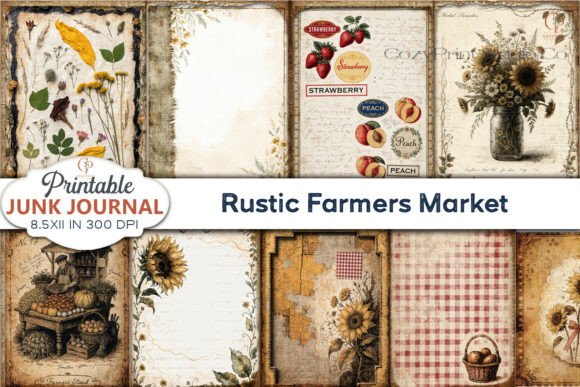
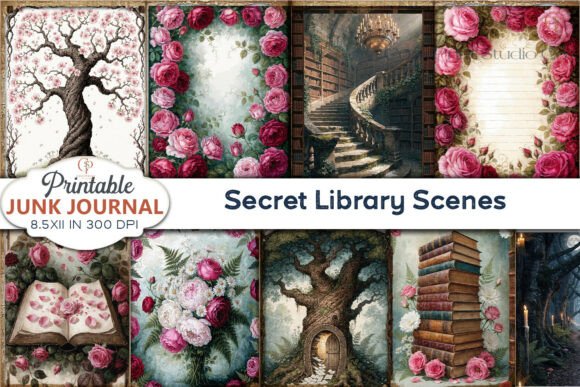
The personality of these pages is one of gentle, organic authenticity. They evoke the feeling of a well-loved garden notebook, with visual characteristics that suggest age, nature, and handcrafted care. You’ll find textures that mimic vintage ledger paper, soft botanical prints that feel discovered rather than designed, and subtle color palettes drawn from springtime gardens—muted greens, soft pinks, earthy browns, and creamy off-whites. This isn’t a sterile, perfect digital file; it’s a digital file that feels like it has a history, which is precisely its appeal.
Where Character Meets Application
The true value of a resource like the Spring Garden Pages Junk Journal lies in its versatility. It’s a design asset that bridges the digital and physical, speaking to a wide range of creative disciplines. For the dedicated junk journaler or scrapbooker, these pages are the literal foundation. They provide immediate depth and interest, eliminating the hunt for the perfect background paper and allowing you to focus on layering ephemera, photos, and personal touches.
Beyond the journal, consider the card maker. A single sheet, trimmed and paired with a simple stamped sentiment, becomes a unique, handmade greeting with a story. For collage artists, these pages offer a cohesive yet varied palette to cut, tear, and reassemble. They’re also ideal for planner decoration, adding a touch of organic beauty to weekly spreads and monthly covers. The applications extend into the realm of DIY creative projects: think custom gift tags, unique book covers for homemade notebooks, or textured backgrounds for art prints.
For professionals in editorial design or packaging design, these pages can inspire a particular brand voice. Imagine a artisanal tea company using a texture from this collection as a subtle background on their packaging inserts, or a boutique publisher using a detail as a chapter opener in a lifestyle book. In social media graphics, a cropped section of one of these pages can serve as a textured background for a quote or announcement, lending an immediate sense of handcrafted quality to a digital feed. The key is to see these files not as finished products, but as creative font—in this case, a creative paper—that imparts a specific mood and style to any project it touches.
Practical Integration into Your Workflow
Adopting a new asset into your creative process requires a bit of strategy. First, evaluate the project fit. The aesthetic of the Spring Garden Pages Junk Journal is inherently soft, vintage, and botanical. It’s a natural fit for projects related to gardening, wellness, literature, romance, history, or artisanal goods. It might feel less aligned with sleek, hyper-modern tech branding or bold, urban streetwear designs. Matching the asset’s personality to the project’s message is crucial for coherence.
Next, consider visual hierarchy and readability. If you’re using a busy page as a background for text, you’ll need to create contrast. A solid, light-colored text box or a semi-transparent overlay can ensure your message remains clear. This is where understanding font pairing becomes valuable. The organic, handwritten feel of these pages pairs beautifully with clean, simple sans serif fonts for modern contrast, or with elegant serif fonts for a more classic, literary feel. Avoid pairing them with overly ornate script fonts that could compete for attention and reduce legibility.
Always test your print settings. Because these are 300 DPI files, they are optimized for high-quality output. Print a test page on your intended paper stock—whether it’s standard printer paper, cardstock, or specialty craft paper—to see how the colors and textures translate from screen to physical object. This step is non-negotiable for any print-based project.
Finally, remember the licensing. The Spring Garden Pages Junk Journal is provided as a digital download only, with no physical item shipped. This model allows for instant access and unlimited personal printing. For commercial use—such as selling finished journals, cards, or artwork made with these pages—it is your responsibility to review the specific license terms provided with the download. Most standard licenses for such assets permit the sale of finished physical goods but prohibit the resale of the digital files themselves. Clarifying this upfront protects your work and respects the original creator’s terms.
In a digital world saturated with sterile graphics, this collection offers a return to tactile warmth. It’s a toolkit for makers who understand that sometimes the best design isn’t invented from scratch, but discovered, curated, and layered with intention. The Spring Garden Pages Junk Journal doesn’t just give you pages; it gives you a starting conversation between your ideas and a rich, textured world of possibility.