Timeless Botanicals: Integrating Vintage Vegetables Junk Journal Pages
In the world of modern typography and graphic design, there is a distinct shift away from sterile, digital perfection toward a more tactile, authentic aesthetic. While vector logos and clean sans serif fonts dominate the corporate landscape, creative professionals are increasingly turning to Vintage Vegetables Junk Journal Pages to inject warmth, history, and character into their projects. This collection is not merely a set of images; it is a comprehensive design asset that bridges the gap between organic storytelling and professional print production. For designers, marketers, and hobbyists looking to create a distinct brand identity or a memorable physical product, understanding the versatility of these pages is essential.
The Anatomy of the Asset: Quality Meets Nostalgia
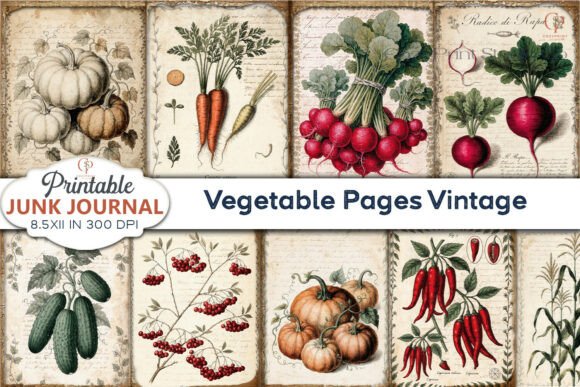
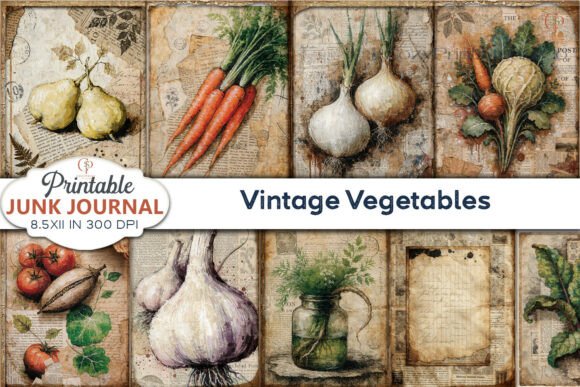
At its core, the Vintage Vegetables Junk Journal Pages collection is defined by its commitment to high-fidelity reproduction. You are receiving 10 distinct JPEG files, each rendered at a massive 300 DPI resolution. In editorial design and packaging design, resolution is the difference between amateur and professional. These files are sized at a standard 8.5 x 11 inch format, making them immediately accessible for standard home printers or professional print shops without the need for complex resizing or interpolation.
The visual personality of these pages leans heavily into the "cottagecore" and "heritage" aesthetics that are currently trending in social media graphics and web design. The imagery typically features muted, earthy tones—think faded greens, ochre yellows, and sepia browns—mimicking the look of aged paper and antique botanical illustrations. Unlike a standard display font which conveys mood through letterforms, these pages convey mood through texture and illustration. They act as a creative font for the background, providing a rich, layered canvas that adds depth to any composition. The style is inherently organic, avoiding the rigid geometry of modern typography in favor of hand-drawn imperfections that signal authenticity.
Strategic Applications: Beyond the Scrapbook
While the product name highlights "junk journals," the utility of Vintage Vegetables Junk Journal Pages extends far into commercial and professional realms. For the small business owner or entrepreneur, these assets offer a cost-effective way to elevate physical marketing materials.
1. Packaging and Product Design:
If you are in the food industry, artisanal goods, or eco-friendly products, these pages serve as excellent background textures for packaging design. Imagine a coffee brand using a subtle vegetable print on their box inserts, or a farm-to-table restaurant using these images for their menu backgrounds. The vintage aesthetic suggests quality, tradition, and organic sourcing—values that resonate deeply with consumers today.
2. Editorial and Print Layouts:
For bloggers and publishers, these files are invaluable for creating mood boards, magazine covers, or planner decoration. In editorial design, a strong visual hierarchy is crucial. These vintage pages can be used as full-bleed backgrounds to anchor a page, allowing white text or a sans serif font to pop against the textured backdrop. This contrast creates a dynamic reading experience that holds the audience's attention.
3. Brand Identity and Collateral:
Developing a brand identity often requires a cohesive set of design assets. These JPEGs can be used to create branded stationery, business cards, or thank-you notes. By printing these pages on high-quality cardstock, you create a tactile experience that digital communications cannot replicate. This is particularly effective for brands that want to position themselves as "boutique" or "handcrafted."
Design Mechanics: Pairing and Hierarchy
One of the most common challenges in using busy, textured backgrounds is maintaining readability. This is where the principles of font pairing become critical. When working with Vintage Vegetables Junk Journal Pages, you must treat the background as a serif font or script font—complex, ornate, and requiring balance.
To ensure readability and visual hierarchy, pair these vintage backgrounds with clean, bold typefaces. A geometric sans serif font or a heavy display font works best for headlines, creating a clear separation between the image and the message. Avoid using a handwritten font or a delicate script font for body copy when placed directly over the vegetable illustrations, as the visual noise can reduce legibility. Instead, use a semi-transparent overlay or a solid text box to clear the space. This technique allows you to utilize the premium font style you desire without sacrificing the user experience.
Furthermore, consider the psychological impact on your audience. The use of natural, vintage imagery influences brand perception. It suggests sustainability, patience, and a connection to the earth. For marketers, this emotional resonance is a powerful tool. It moves the brand away from being seen as just another digital entity and positions it as a living, breathing organism with a history.
Practical Implementation and Workflow
Integrating these files into your workflow is seamless due to their format. As digital files available for instant download, they remove the friction of shipping and handling. Here is how different creative professionals can maximize their value:
- For Scrapbooking and Paper Crafts: Print the 8.5 x 11 inch sheets directly onto matte paper. The 300 DPI ensures that even if you zoom in or crop a specific vegetable illustration for a focal point, the edges remain crisp. These are perfect for DIY creative projects where layering is key.
- For Digital Designers: Import the JPEGs into Photoshop or Illustrator. You can desaturate them further for a monochromatic look or increase the contrast to make the vegetable line art more pronounced. They work exceptionally well as texture layers set to "Multiply" or "Overlay" blending modes.
- For Card Making: Use the pages as the background layer of a greeting card. The intricate details of the vegetables provide enough visual interest that you may only need to add a simple "Thank You" or "Happy Birthday" sentiment in a bold typeface to complete the design.
Evaluating the Commercial License and Value
When investing in design assets, understanding the usage rights is as important as the visual appeal. It is vital to note that this is a digital download only. There is no physical inventory to store, which is a significant advantage for entrepreneurs working from home offices. You can print these pages as many times as you need for your personal creative projects.
However, for commercial use—such as selling the printed journals or using the graphics in a logo for a client—always review the specific licensing terms provided with the download. Generally, standard licenses allow for use in physical end products, but restrictions often apply to distributing the raw digital file itself. By adhering to these guidelines, you protect your business and respect the work of the original artist.
In conclusion, Vintage Vegetables Junk Journal Pages are more than just a nod to the past; they are a versatile, high-quality resource for the modern creator. Whether you are a designer building a complex brand identity, a blogger seeking unique visuals, or a hobbyist looking to elevate your paper crafts, these pages offer a blend of aesthetic beauty and technical precision. By combining these vintage textures with strong modern typography and thoughtful layout strategies, you can create projects that are not only visually stunning but also deeply engaging to your audience.